Sideways Is the New Forward: Rethinking Career Advancement Through Strategic Lateral Moves
Photo: Unknown authorUnknown author, Public domain, via Wikimedia Commons
The Myth of the Straight Line
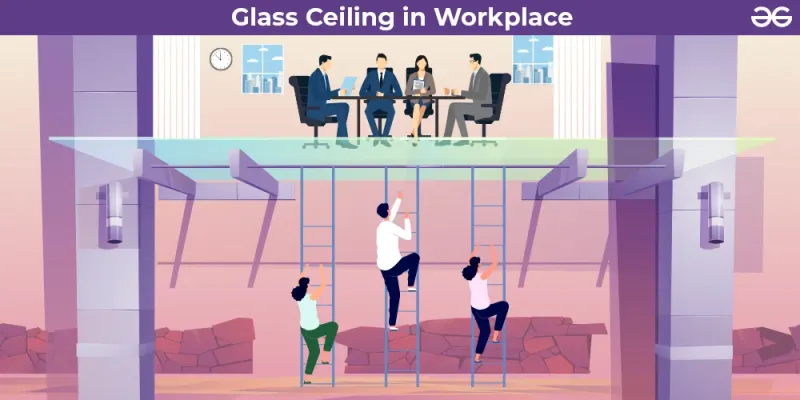
American professionals are conditioned early to think of career advancement as a vertical exercise. The mental model is familiar: entry-level, mid-level, senior, director, vice president, executive. Progress is measured in titles, reporting structures, and compensation bands stacked neatly on top of one another. Any deviation from that upward path is often perceived — by the professional and by observers alike — as stagnation, a setback, or worse, a sign of diminishing potential.
That assumption deserves serious scrutiny.
A growing body of evidence from leadership research, executive coaching, and organizational behavior suggests that professionals who make deliberate lateral moves — across functions, business units, companies, or industries — frequently outpace their vertically focused peers over a ten- to twenty-year horizon. The reason is not counterintuitive once examined: breadth of experience, when accumulated strategically, creates a kind of professional leverage that depth alone cannot replicate.
What a Lateral Move Actually Builds
When a marketing director accepts a role leading a product operations team at the same salary and seniority level, the immediate optics may appear neutral at best. But consider what that professional gains over eighteen to twenty-four months: an intimate understanding of how product decisions translate to operational constraints, credibility with a technical workforce, relationships with stakeholders who previously sat in a different silo, and a portfolio of problem-solving experiences that no marketing-only career path would have generated.
This is the compounding logic behind the lateral leap. Each horizontal move adds a dimension to the professional's skill profile that makes them increasingly rare — and increasingly valuable — as they continue to advance.
Specifically, strategic lateral moves tend to build three assets that vertical promotions often do not:
Cross-functional fluency. Leaders who have operated inside multiple disciplines are far better equipped to manage complex organizations, broker internal negotiations, and drive enterprise-wide initiatives. They speak the language of finance, operations, sales, and technology because they have worked within those contexts — not simply alongside them.
Expanded network architecture. Each lateral move introduces a professional to an entirely new constellation of colleagues, mentors, vendors, and industry contacts. Over time, this produces a network that spans organizational layers and industry sectors, which is precisely the kind of connectivity that surfaces high-visibility opportunities and executive-level referrals.
Adaptive problem-solving credibility. Professionals who have navigated diverse environments demonstrate, through direct experience, that they can perform under unfamiliar conditions. This is a quality that boards, executive search firms, and hiring committees prize — particularly when filling roles that require organizational transformation or cross-divisional leadership.
The Mid-Career Inflection Point
Lateral moves are valuable at any career stage, but they carry particular strategic weight at the mid-career inflection point — typically the period between ten and twenty years into a professional's working life. This is the phase when many high performers find themselves technically proficient and organizationally embedded, but quietly plateaued. They are excellent at what they do, and that excellence has become a kind of constraint.
The organizations that employ them have mentally filed them under a specific function or expertise area. Colleagues and supervisors have formed stable expectations. Opportunities that arrive tend to be variations on a familiar theme. The result is a professional who is advancing in compensation and perhaps in title, but not necessarily in scope, influence, or long-term executive readiness.
A deliberate lateral move during this window — particularly one that introduces genuine unfamiliarity — can disrupt that pattern in productive ways. It signals to the market that the professional is not defined by a single function. It forces the development of new competencies under real conditions. And it often reactivates the professional's own sense of ambition and curiosity, both of which are essential fuel for sustained career growth.
Addressing the Risk Perception Problem
The most common objection to lateral moves is the perception of risk. Professionals worry that stepping sideways will be read as a failure to ascend, that peers will interpret the move as a demotion in disguise, or that they will lose hard-earned standing in their primary field.
These concerns are not unfounded, but they are frequently overstated — and they are almost always manageable with deliberate framing.
The distinction between a reactive lateral move and a strategic one is largely a matter of narrative. A professional who accepts a lateral role without a coherent explanation will invite speculation. A professional who articulates a clear developmental rationale — "I am building operational experience to complement my commercial background in preparation for a general management role" — communicates intentionality that most senior leaders and hiring decision-makers will respect.
It is also worth noting that the professionals most likely to judge a lateral move harshly are those operating under the same vertical-only assumptions that this article challenges. Executives who have built genuinely broad careers tend to view cross-functional experience as a marker of ambition, not a departure from it.
How to Evaluate Whether a Lateral Move Makes Strategic Sense
Not every lateral opportunity represents a sound investment. The following questions can help professionals assess whether a potential sideways move is likely to accelerate their trajectory or simply redirect it without purpose.
Does this role expose me to a skill, function, or stakeholder group that is currently absent from my profile? If the honest answer is no — if the new role is simply a variation on what you already do — the developmental value is limited.
Will this move expand my network into a segment I currently cannot access? Lateral moves that introduce professionals to entirely new organizational layers, industries, or geographic markets tend to generate disproportionate long-term returns.
Does this position align with the type of leadership role I am targeting three to five years from now? Lateral moves are most effective when they are directional — when they build toward something specific rather than simply accumulating variety for its own sake.
Is the organization or team I am joining one that will challenge and develop me? The quality of the environment matters as much as the title. A lateral move into a high-performing team with strong leadership often produces more growth than a vertical promotion into a dysfunctional one.
The Broader Shift in How Advancement Is Defined
The traditional career ladder is not disappearing, but it is being joined by a broader set of models that better reflect how organizations actually operate and how leadership capability is genuinely developed. The professionals who will occupy the most consequential roles over the next decade are likely to be those who built wide before they built tall — who accumulated cross-functional authority, diverse relationships, and adaptive experience through a career path that did not always move in a straight line.
For members of ELC Workforce Professionals, this represents both a personal opportunity and an organizational one. The networks and peer advisory relationships cultivated through professional communities like this one are among the most effective tools available for identifying lateral opportunities, evaluating their strategic merit, and navigating the transitions they require.
Advancement, ultimately, is not a direction. It is a destination. And the most direct route there is not always the one that points straight up.